
Indian Real Estate Market 2026: Why Gurugram Is Under Pressure and Booming at the Same Time
Affordability is genuinely tighter for a large share of homebuyers this year. At the same time, Gurugram's commercial corridors are absorbing office space at a record pace, almost entirely on the back of Global Capability Centres. Here's what the 2026 data actually says — and where that leaves buyers and investors.
Two growth engines shaping Gurugram real estate — as of Q1 2026

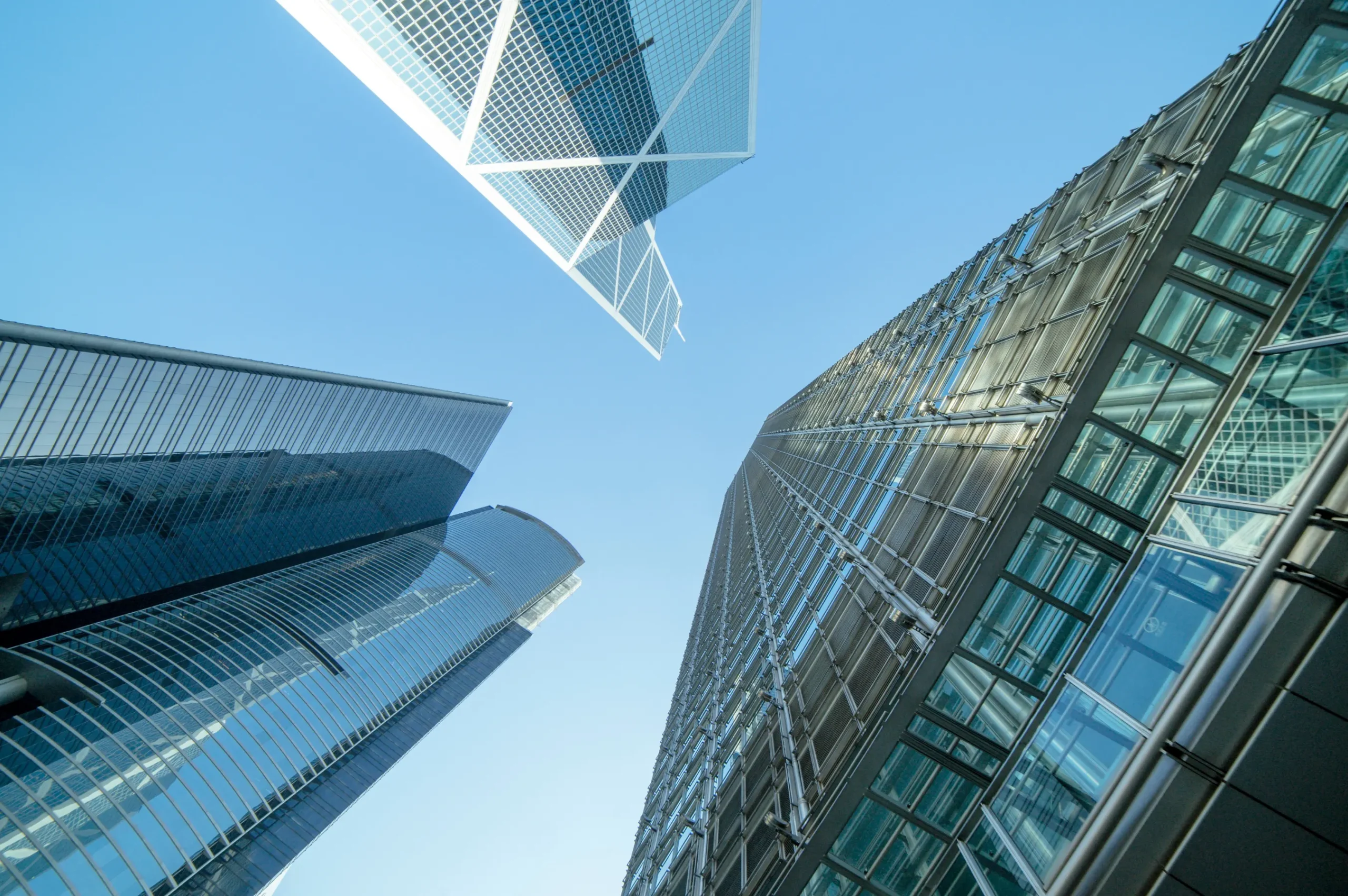
Hero — Gurugram skyline / Golf Course Extension Road towers
A market split down the middle
According to a report by CareEdge Ratings released in August 2026, India's real estate sector is expected to stay resilient through the year, supported by stronger developer balance sheets, sustained office leasing, and continued growth in manufacturing and warehousing. But the report is equally clear that this resilience isn't evenly spread. Affordable housing and project execution are facing real cost pressure, while office leasing — powered by GCC demand — has stayed one of the strongest-performing parts of the sector.
The numbers back this up. CareEdge expects residential sales across India's top six cities to stay broadly range-bound at around 3.55 lakh units for CY2026 — healthy, but not explosive. Premium and luxury housing is expected to hold up well, driven by high-net-worth individuals, affluent domestic buyers, and NRIs. Affordable housing, by contrast, is more exposed to elevated inflation, interest rates, and rising construction costs.
That shift toward the premium end is already visible in the launch data. Homes priced above ₹1.5 crore accounted for 53% of new residential launches across India's top seven cities in Q1 2026, up from 43% a year earlier. Homes priced below ₹1.5 crore fell from a 57% share to 47% over the same period. Developers are increasingly building for the segment that's still buying with confidence.
The affordability squeeze is real — but it isn't everywhere
The Reserve Bank of India's cumulative 125-basis-point repo rate cuts through the first half of 2026 have made home loans meaningfully cheaper, and that relief has filtered through to buyer sentiment in most cities. The RBI has since held the repo rate steady at 5.25%, giving the market a stable rate environment to plan around. Sales across the top seven cities totalled roughly 90,715 units in Q2 2026, with new launches up about 7% year-on-year.
But the benefit of cheaper loans hasn't landed evenly. Affordability continues to be a genuine strain specifically in Mumbai and the National Capital Region, even with borrowing costs down. Interestingly, Delhi-NCR still saw a 39% jump in new residential launches over the same period — proof that infrastructure-led growth corridors can keep drawing developer interest even while affordability stays tight for a large share of buyers.
Premium and NRI-led housing is the exception, not the rule
The segment that keeps defying the affordability narrative is the top end. Knight Frank projects the number of Indian billionaires to rise 51%, from 207 in 2026 to 313 by 2031, and that wealth creation is translating directly into demand for low-density, high-privacy homes in markets like Gurugram — private lifts, dedicated lobbies, concierge services, and smaller, more exclusive unit counts per floor. Long-term capital from Gulf-based NRIs, who represent the majority of India's 15–20% NRI buyer share, has remained firmly in place through this cycle.
This is precisely the buyer Khushi Housing Solutions works with most often — HNIs, NRIs, and end-users evaluating Gurugram's luxury residential and commercial corridors, where demand fundamentals look very different from the national affordable-housing headlines.
GCCs are rewriting Gurugram's commercial map
If 2026 has a single defining theme for Indian commercial real estate, it's this: GCCs are no longer a side story — they're close to being the whole story. Gross office transactions across India hit a record 29.9 million sq ft in Q1 2026 alone, up 6% year-on-year, and GCCs accounted for 48% of that total. CareEdge expects Grade-A office absorption across the top six cities to cross 90 million sq ft for all of CY2026.
Gurugram has been one of the biggest beneficiaries of this shift. Between 2021 and Q1 2026, the city added roughly 21 million sq ft of new office supply while leasing out nearly 40 million sq ft. The city's office stock now includes about 59 million sq ft of green-certified assets and close to 35 million sq ft of institutionally owned office space, spread across established hubs like DLF Cyber City, Golf Course Road, MG Road, and Extended Golf Course Road.
GCCs alone are estimated to account for 40–45% of enterprise office space uptake in Gurugram right now, with that share projected to touch 50% within two years. The main clusters driving this are Cyber City, Udyog Vihar, Golf Course Extension Road, and increasingly Dwarka Expressway — and it isn't just IT tenants anymore. BFSI firms, consulting majors, and GCC back-offices are all competing for the same Grade-A stock.
Golf Course Extension Road: the corridor GCCs are choosing
Ten years ago, Golf Course Extension Road (GCER) was where Gurugram's senior professionals lived — not where they worked. That's changed. GCER has matured into one of Gurugram's most actively leased commercial corridors, currently commanding Grade-A rents of roughly ₹100–130 per sq ft, still a 10–15% discount to Golf Course Road proper. That gap is exactly what's pulling BFSI, consulting, and GCC operators toward the corridor — Golf Course Road-adjacent quality without the Golf Course Road price tag, on 3–9 year leases signed ahead of further rent escalation.
Delhi-NCR as a whole recorded close to 15.8 million sq ft of office leasing in 2025 (per Cushman & Wakefield), a 24% year-on-year jump and the highest annual leasing volume on record for the region, with roughly 2.8 million sq ft more leased in Q1 2026 alone. Gurugram, and GCER specifically, has captured an outsized share of that momentum.
Grade-A office interior / GCC-style workspace
Emaar India Business Centre
Emaar IBC sits inside the exact corridor and price band that GCC, BFSI, and consulting tenants are actively competing for across Gurugram right now — Grade-A specifications, sustainability certification, and a location 10–15% cheaper than core Golf Course Road while sitting minutes from it. For an investor thinking about long-term rental income or capital appreciation off the back of Gurugram's GCC growth story, it's a fairly direct way to be positioned in that trend.
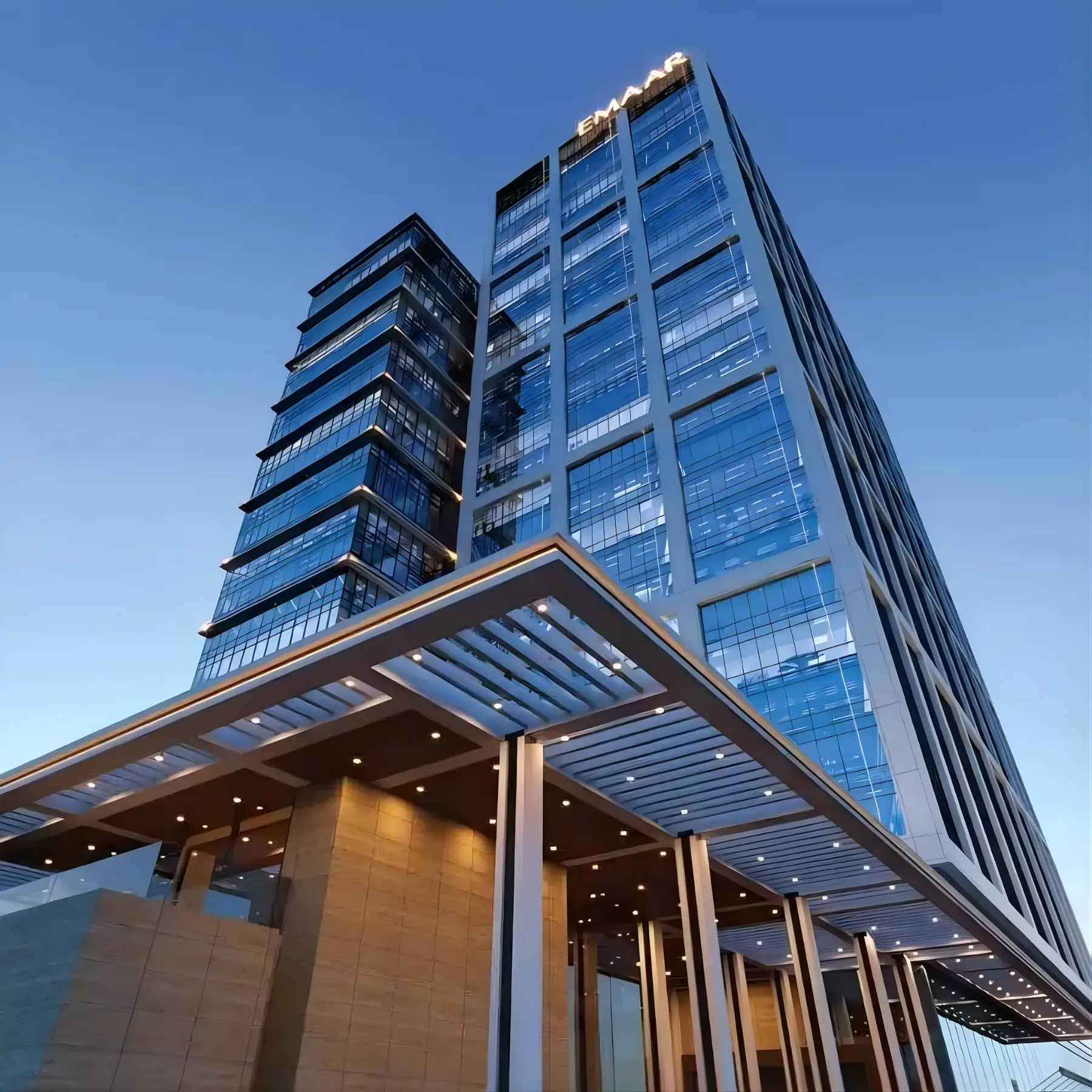
Emaar India Business Centre, Sector 61
What this actually means for you
Common questions on Gurugram's 2026 market
It depends heavily on the segment. Premium and NRI-led housing is holding up well on strong underlying demand, while affordability remains a genuine constraint for many mid-income buyers in Gurugram and the wider NCR, even with lower home loan rates.
GCCs now account for an estimated 40–45% of enterprise office leasing in Gurugram, and close to half of all office transactions nationally in early 2026. That demand is driving rents, absorption, and eventually residential demand in the sectors surrounding major office corridors like Golf Course Extension Road.
GCER has become one of Gurugram's most actively leased commercial corridors, offering Grade-A rents at a 10–15% discount to Golf Course Road while attracting the same BFSI, consulting, and GCC tenant base — one of the corridors most directly benefiting from Gurugram's GCC-led leasing growth.
Every project's RERA number can be checked directly on the Haryana RERA website, haryanarera.gov.in. Always cross-check the registration number quoted by a developer or channel partner against the official record before making any payment.
Considering Gurugram's GCC-led commercial boom?
Get current pricing, RERA status, and payment plans for Emaar IBC and other Golf Course Extension Road commercial addresses — from an advisor already working this corridor.
Data sources: CareEdge Ratings (August 2026), CBRE Research, Cushman & Wakefield, Knight Frank, ANAROCK / NBR Group market reports, and developer-published specifications for Emaar India Business Centre. RERA status verifiable at haryanarera.gov.in.