The Dwarka Expressway Extension & Its Impact on Gurugram Real Estate
A fresh proposal for a Dwarka Expressway extension has put one of Gurugram’s most important corridors back in the spotlight. On the surface it reads as a traffic story — a plan to push the eight-lane expressway deeper into Delhi. But for anyone who owns property in Gurugram, or is planning to buy here, the more important question is what this kind of infrastructure does to property values. This article gives you a clear, data-backed reading of what is actually being built and how each project tends to move the market.
What was actually announced
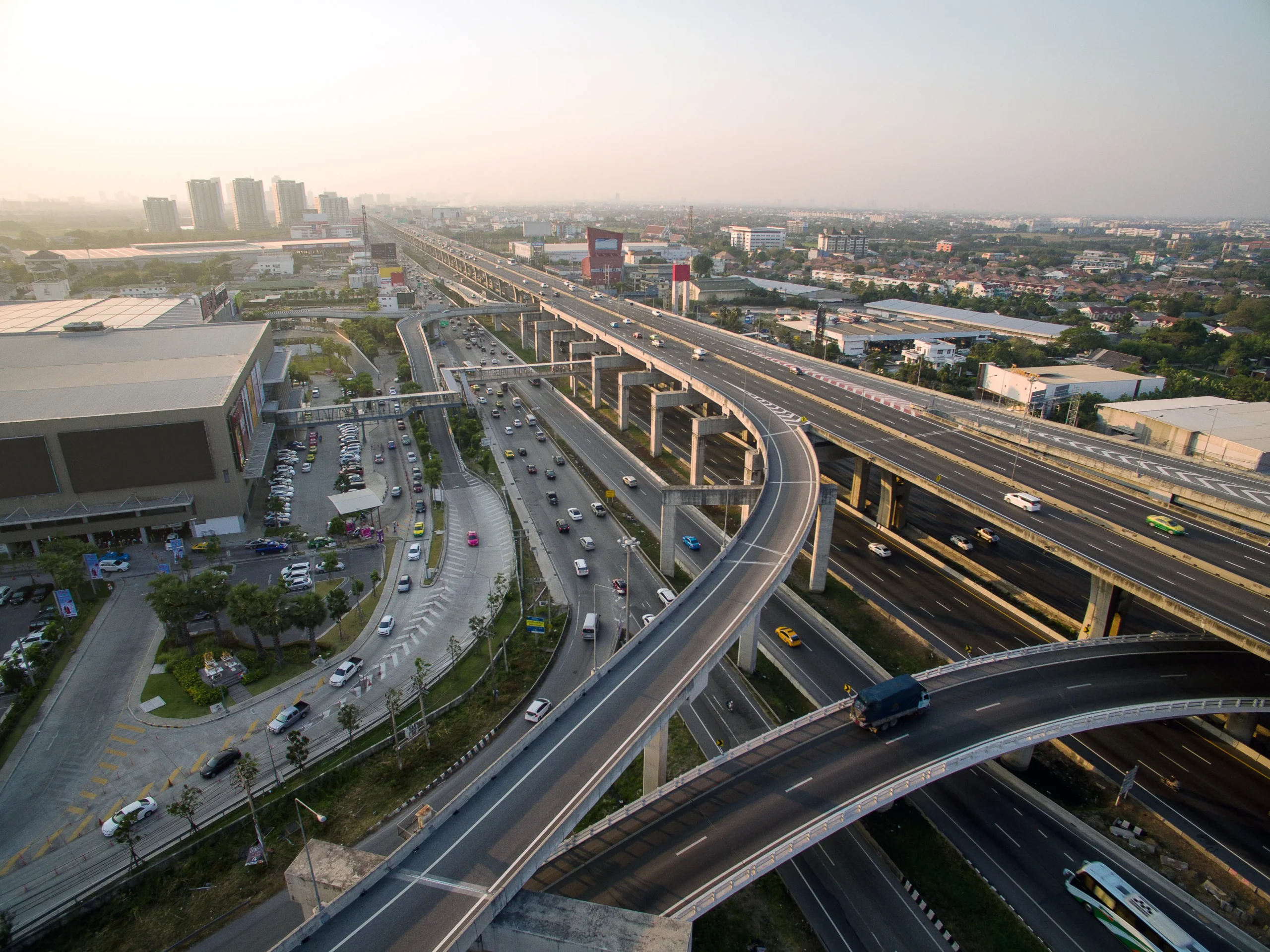
In late May 2026, a new master plan drafted by Delhi International Airport Limited (DIAL) proposed extending the eight-lane Dwarka Expressway all the way to Delhi’s Mayapuri Ring Road. The aim is to clear the long-standing bottleneck near Mahipalpur and Indira Gandhi International (IGI) Airport, where the expressway currently merges into the Delhi–Jaipur Highway (NH-48) and traffic can crawl for up to twenty minutes inside the three-kilometre tunnel.
The proposal bundles several supporting works: a new flyover linking the expressway from Rezangla Chowk, a Rangpuri bypass, extensions to the Urban Extension Road-II (UER-II) and the Barapulla elevated road, a fresh Talkatora–Barapulla link, and the development of a “Greater Southern Peripheral Road” on the Gurugram side to spread regional traffic more evenly. Alongside this, the Gurugram Metropolitan Development Authority (GMDA) has prepared a roughly ₹52-crore plan to overhaul a nine-kilometre stretch from Basai village to IFFCO Chowk — work expected to improve connectivity for residents across nearly 100 sectors.
| One honest caveat before we go further
This extension is, at this stage, a proposal under a master plan. High-level meetings on funding and approvals are still ongoing, and timelines are not yet locked. We present it as an emerging opportunity to track — not a finished project. The market figures further down, by contrast, are already-recorded data. |
This is one piece of a much larger build-out
The Dwarka Expressway extension does not stand alone. It sits inside a layered infrastructure push across Delhi-NCR and Gurugram that is already moving from paper to tender:
- A ~₹30,000-crore Delhi-NCR road programme covering six major projects, including an AIIMS–Mahipalpur–Gurugram elevated corridor (work expected to begin December 2026) and a 17-km, six-lane link between the Delhi–Amritsar–Katra Expressway and UER-II at an estimated ₹1,500 crore.
- GMDA’s ~₹3,500-crore infrastructure roadmap for FY 2026–27, focused on Gurugram’s roads, flyovers and water systems.
- The elevated Southern Peripheral Road (SPR), planned in two stretches — Ghata to Vatika Chowk and Vatika Chowk to NH-48 — giving signal-free movement and connecting the SPR directly to both the Dwarka Expressway and the Delhi–Jaipur Highway. The Vatika Chowk–NH-48 stretch alone (about 5.3 km, roughly ₹750 crore) is expected to serve close to 50,000 vehicles a day.
- New flyovers and a cloverleaf interchange at junctions such as Vatika Chowk, Ambedkar Chowk, Dadi Sati Chowk and Bakhtawar Chowk.
- A confirmed Metro extension of the Blue Line corridor from Dwarka Sector 21 towards Kherki Daula, slated for the 2026–27 window — giving the expressway sectors a direct rail link into Delhi.
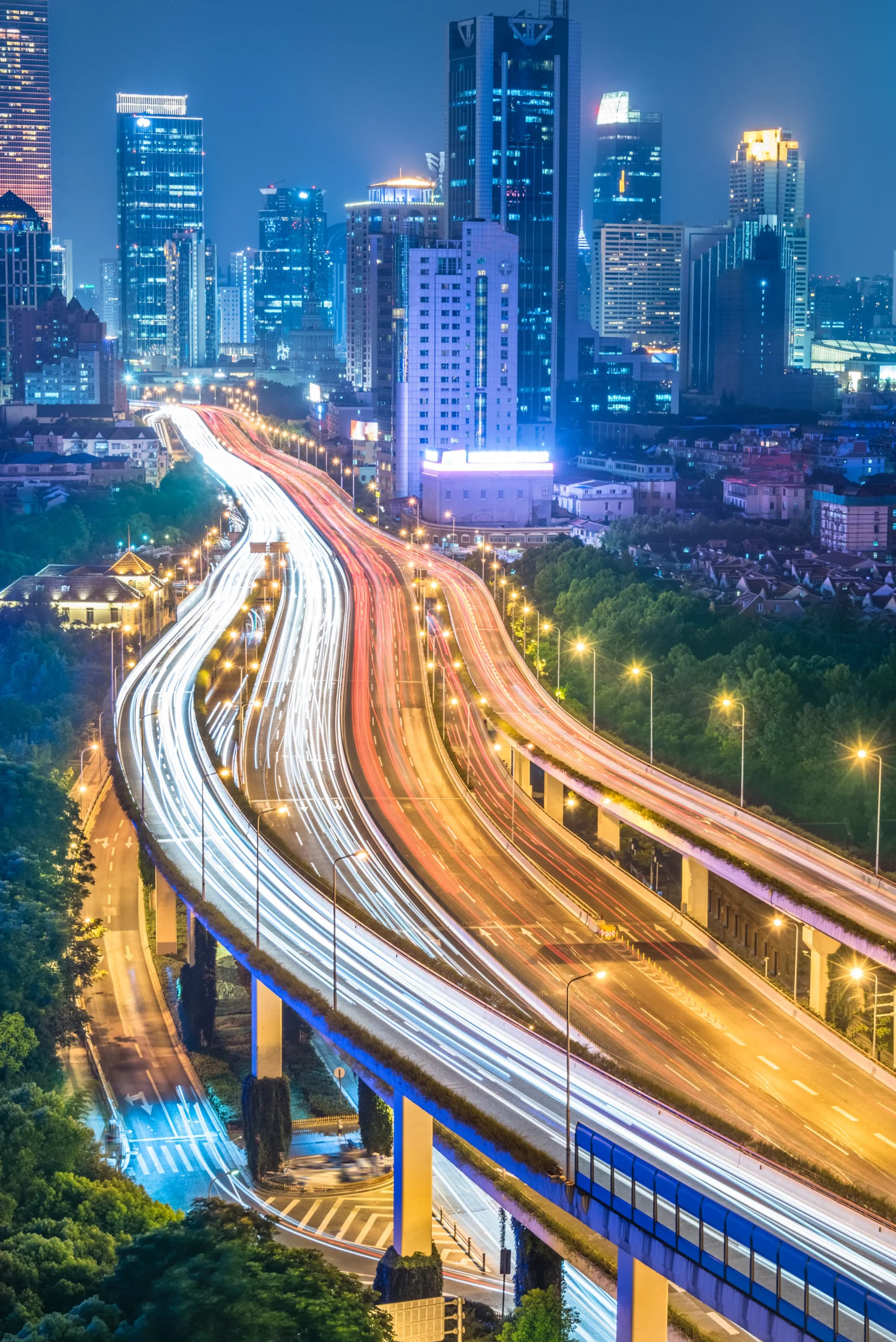
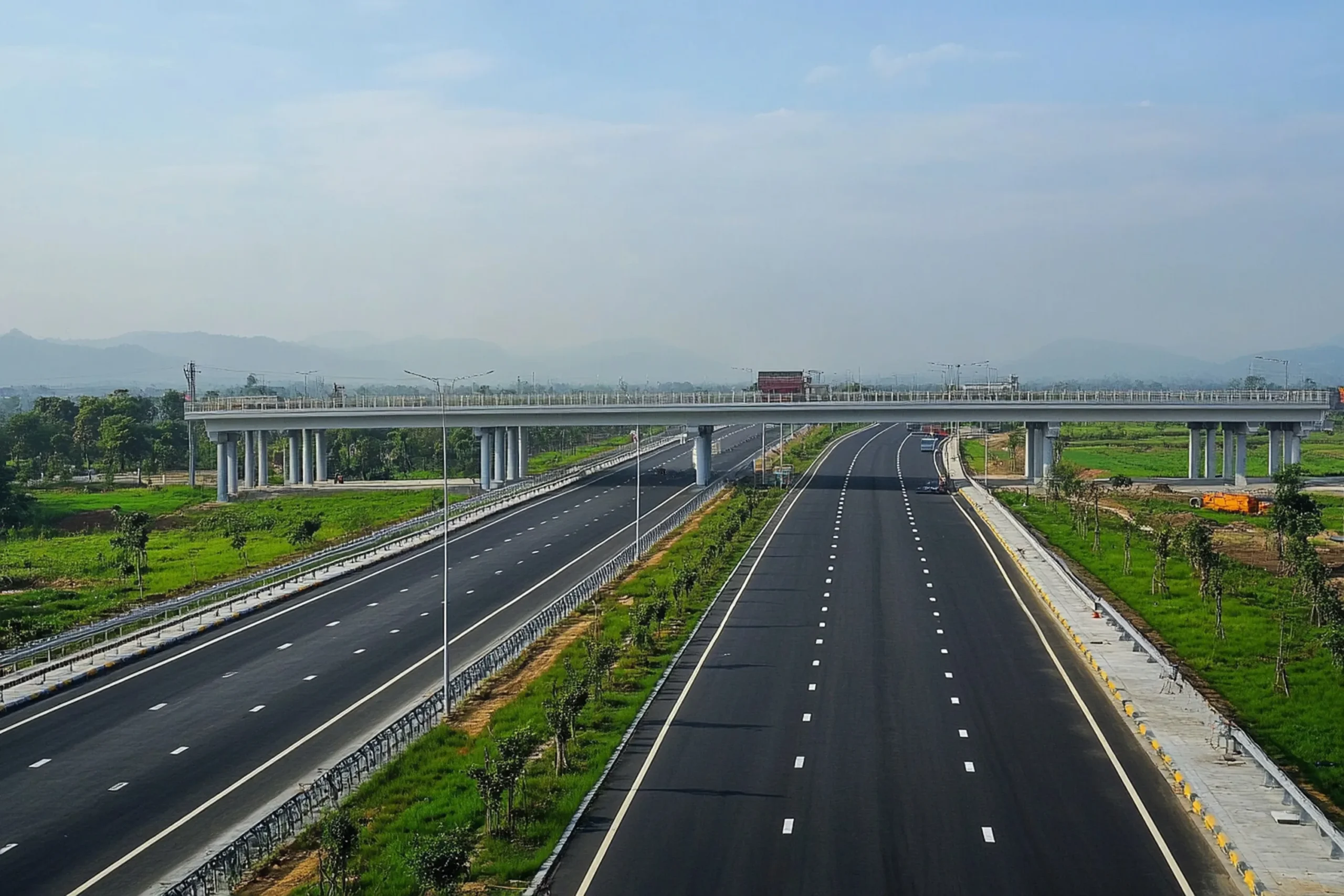
For context, the Haryana stretch of the expressway opened in March 2024 and the Delhi stretch (about ₹5,360 crore) was inaugurated in August 2025, taking the full 27-plus-kilometre, largely elevated highway live. The new proposal is essentially about fixing the last mile into central Delhi — historically the corridor’s weakest link.
Why infrastructure moves Gurugram real estate
Connectivity is the single most reliable price driver in NCR. The pattern repeats: a corridor is announced, land and under-construction inventory re-rate on expectation, and a second wave of appreciation follows once the asset is operational and travel times genuinely drop. Three levers are at work with this extension.
1. Airport and Delhi access
The whole point of the extension is faster, cleaner movement to IGI Airport and into Delhi proper. Proximity to the airport already commands a measurable premium on the corridor, and removing the Mahipalpur choke point makes that proximity real rather than theoretical.
2. Signal-free internal movement
The elevated SPR, the cloverleaf at Vatika Chowk and the new flyovers reduce friction between Golf Course Extension Road, Sohna Road, the SPR sectors and the Dwarka Expressway. When micro-markets stitch together, isolated pockets stop trading at a discount.
3. Metro rail
A confirmed Metro link historically triggers a fresh leg of appreciation in the sectors it touches, because it widens the buyer pool to people who do not want to depend on a car for the Delhi commute.
The numbers the corridor has already delivered
This is where the case stops being a story and becomes a track record. The following figures come from recognised industry data houses, not estimates:
- ~151% price growth on the Dwarka Expressway over five years (per 99acres data).
- 58% year-on-year surge in Q4 2024–Q1 2025 — the highest of any residential corridor in India (CREDAI-Colliers-Liases Foras).
- ~200% appreciation between 2016 and 2026 (Magicbricks data).
Global consultancy Colliers has placed Gurugram’s micro-markets among the country’s top high-growth pockets, with corridors like Sohna projected to see capital values rise up to 1.6 times by 2030 on the strength of infrastructure maturity and commercial pipeline. Meanwhile, circle rates along the Dwarka Expressway were revised upward sharply from April 2026 — a move that, while it raises entry cost, is itself an official acknowledgement of how far on-ground values have already climbed.
Where do rates sit today? A rough corridor snapshot:
| Micro-market | Indicative residential rate (per sq. ft.) |
|---|---|
| Sohna | ₹7,500 – ₹8,500 |
| Dwarka Expressway (mid to premium) | ₹9,000 – ₹16,000+ |
| Golf Course Road | ₹14,000 – ₹35,000 |
| DLF Phase 1–5 | ₹25,000 – ₹45,000+ |
The takeaway: the Dwarka Expressway corridor still trades at a meaningful discount to the established Golf Course Road belt, while carrying a stronger forward infrastructure pipeline. That gap is exactly what a successful extension narrows over time.
Which Gurugram pockets stand to gain
If the extension and its companion projects proceed, the most direct beneficiaries are:
- Dwarka Expressway sectors (102, 103, 104, 106, 109, 112) — the closest to improved Delhi and airport access, and the same sectors the Metro extension touches.
- SPR and Golf Course Extension Road sectors — direct winners from the elevated SPR and the Vatika Chowk cloverleaf removing daily bottlenecks.
- New Gurugram and Sohna — value plays that re-rate as the corridor’s connectivity premium spreads outward and the price arbitrage closes.
What this means if you are buying or investing
Infrastructure-led corridors reward buyers who enter before a project is complete, because the steepest appreciation tends to happen between the credible-announcement stage and the operational stage. The expressway has already lived through one such cycle; the extension and Metro open a potential second.
That said, the disciplined approach is to separate what is funded and under construction (the SPR works, the live expressway, the confirmed Metro) from what is still at master-plan stage (the Mayapuri extension itself). The first group derisks the corridor today. The second is the upside you position for — not the assumption you pay full price for.
Property decisions should always be matched to your own horizon, budget and risk appetite. The figures here are market data, not a guarantee of future returns.
Frequently asked questions
Will the Dwarka Expressway extension increase property prices in Gurugram?
Historically, major connectivity upgrades on this corridor have been followed by strong price appreciation. If the extension proceeds and travel times to Delhi and the airport fall, the sectors closest to the corridor are the most likely to benefit — though the extension is still at the proposal stage.
Is the Dwarka Expressway extension confirmed?
Not yet. As of May 2026 it is a master-plan proposal by DIAL with funding and approvals still under discussion. Several companion projects — the elevated SPR, flyovers and the Blue Line Metro extension — are further along and more firmly committed.
Which sectors benefit most from the Dwarka Expressway?
Sectors 102, 103, 104, 106, 109 and 112 along the expressway, plus the SPR and Golf Course Extension Road sectors, are positioned to gain the most from improved access and the Metro extension.
Is Dwarka Expressway a good investment in 2026?
The corridor has a documented track record of appreciation and still prices below the established Golf Course Road belt, with a strong forward infrastructure pipeline. As with any investment, suitability depends on your budget, time horizon and risk appetite — speak to an advisor before committing.
| Want a sector-by-sector readout?
We track every live and proposed project on this corridor and map it against verified pricing — so you buy on data, not headlines. |
Sources: Infrastructure — The Tribune / DIAL master plan (May 2026), GMDA & Haryana Budget 2026 announcements, PTI (expressway inaugurations). Pricing & market data — CREDAI-Colliers-Liases Foras Q4 2024–25 report, Colliers India, Knight Frank India, 99acres, Anarock and Magicbricks.
Disclaimer: The Dwarka Expressway extension to Mayapuri is a proposal at the master-plan stage and is subject to government approval and final timelines. Property prices and circle rates change frequently; verify current figures before transacting. This article is for information only and is not financial advice.